
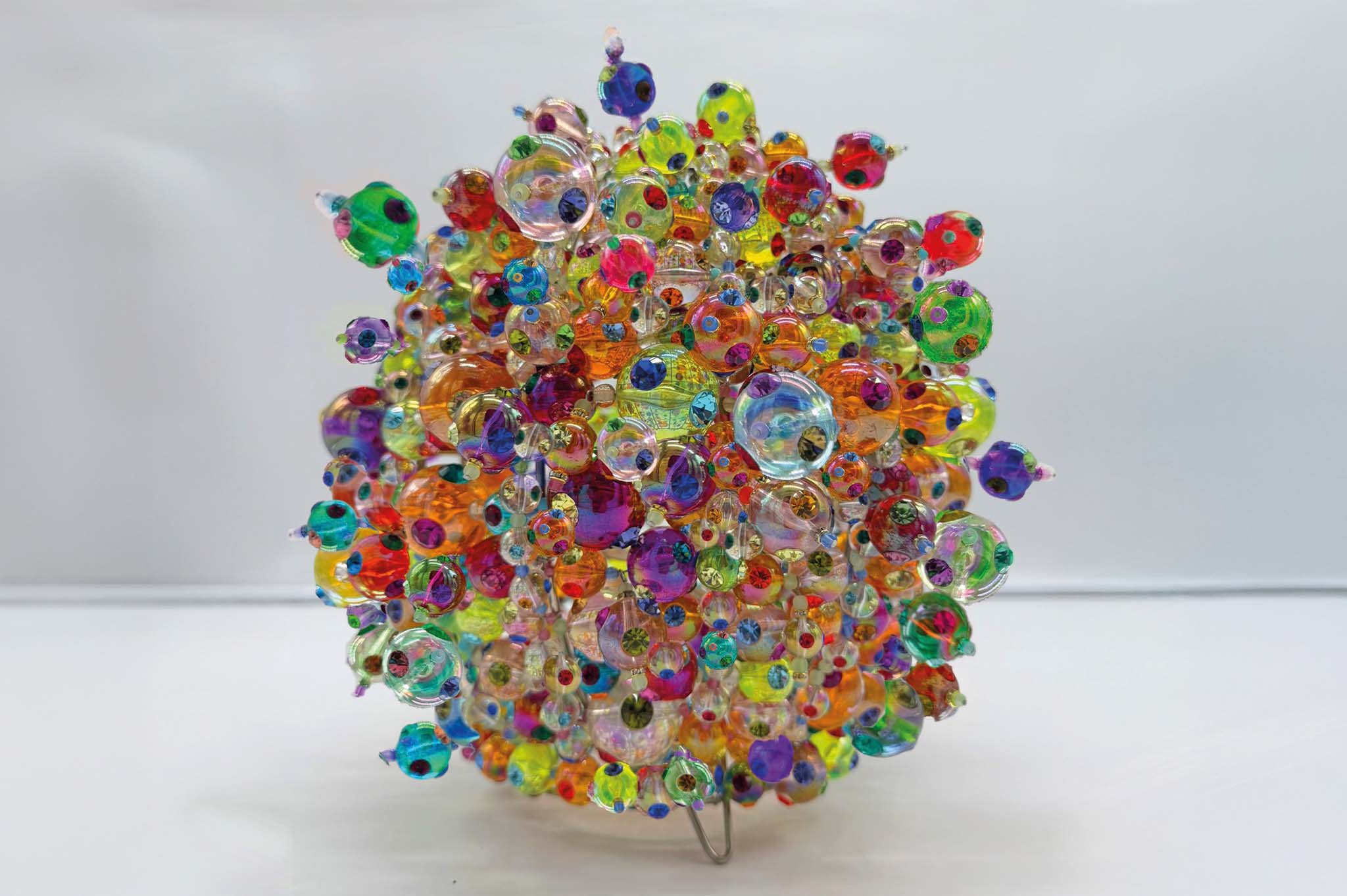
Hotel Gabrielli Venice hosts the works of the finalists of the biennial La Grande Bellezza by Starhotels Award, dedicated to the theme The Beauty of Utility. The exhibition presents objects in which aesthetics and functionality come together in perfect harmony, drawing inspiration from Italy’s rich cultural and natural heritage. Part of the cultural programme On the Occasion of Homo Faber 2026, the exhibition also features in The Venice Glass Week, creating a dialogue with the remarkable chandeliers that illuminate the Hotel, including pieces crafted by the historic Seguso glassworks and recently restored.
"DARK SUN AND ME"
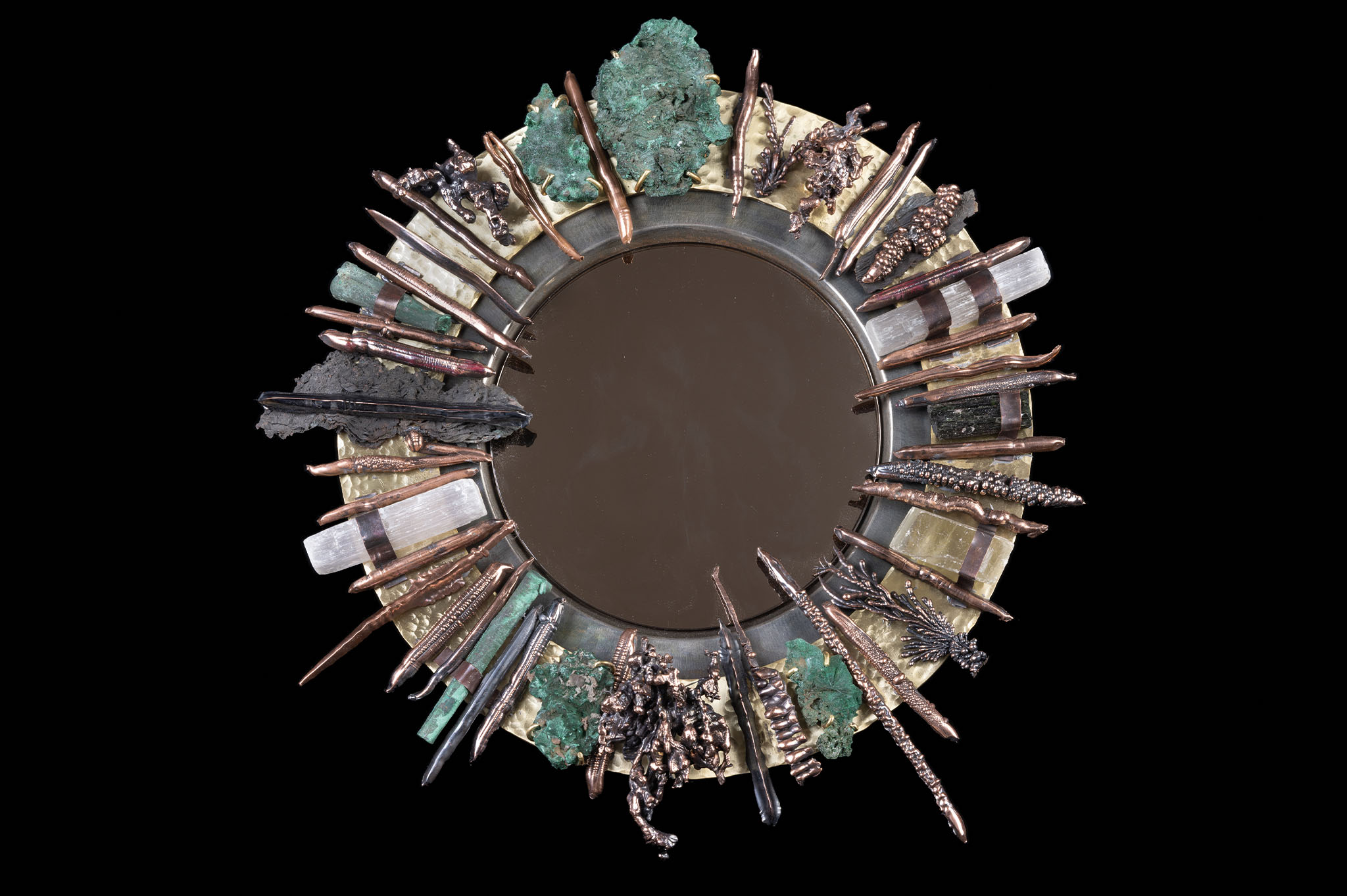
By Materie by Paolo Mangano
A circular smoked wall mirror framed in iron and brass, conceived as a sun with abstract rays and the viewer’s reflected face at its centre. The rays, made from copper and brass waste from electroplating production, are entirely shaped by hand and finished with polished and burnished surfaces. Malachite and rough crystals are set among the metal elements in a radial arrangement, adding touches of colour and symbolically evoking an underground world in dialogue with solar energy. The combination of reclaimed materials gives the piece a precious, understated and mysterious presence. Techniques include laser cutting of the frame, hand-shaping of the rays and handcrafted stone settings.
maestrodartemestiere.it/it/libro-d-oro/2024/paolo-mangano
_________
"ALLEGRETTO"
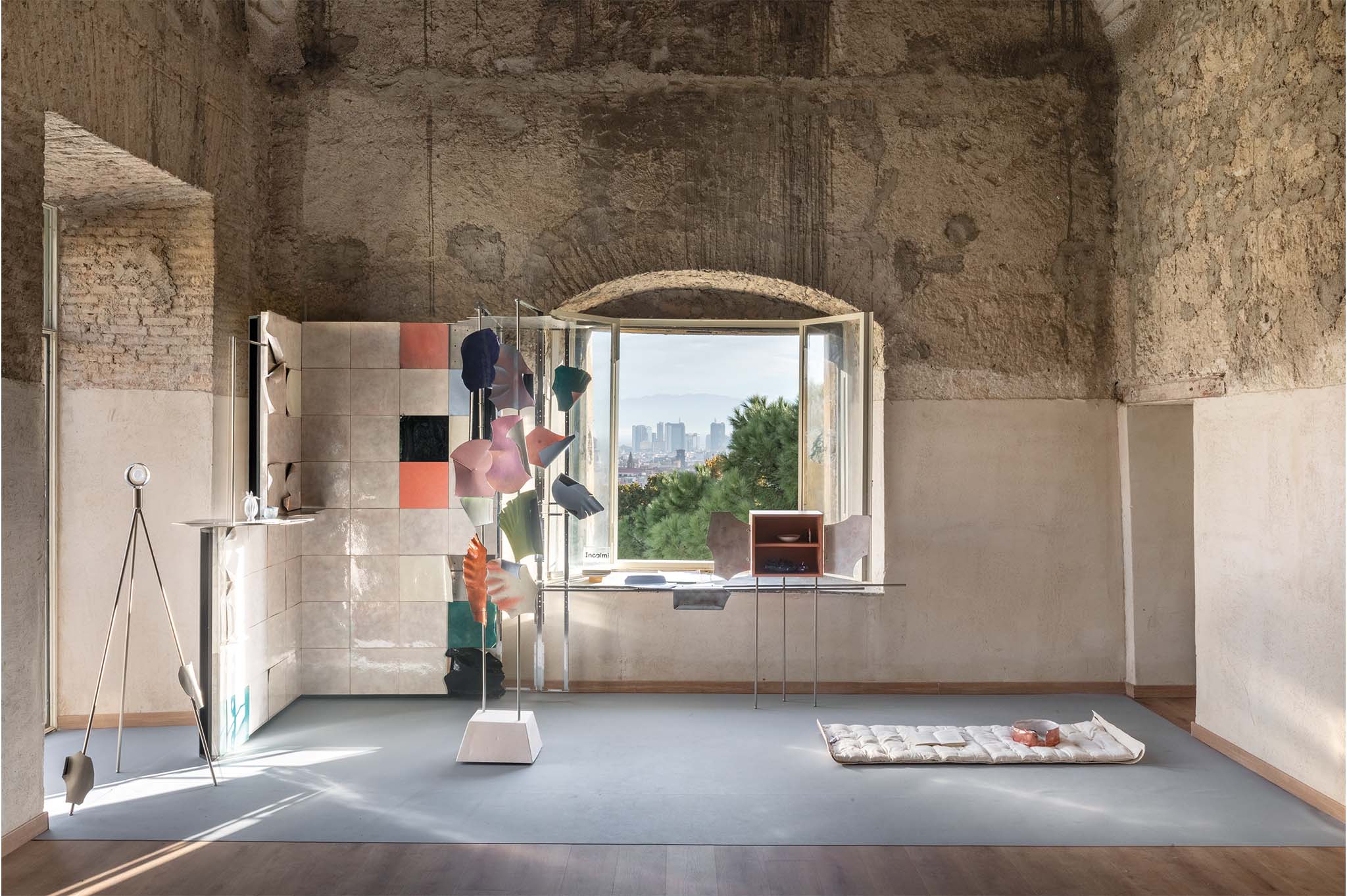
Incalmi
Allegretto is Valentina Cameranesi Sgroi’s interpretation of Incalmi’s Maniera modular system, designed for temporary and reconfigurable spaces. Its versatile aluminium structure can be repositioned and fitted with shelves, lighting points and different materials. In the designer’s vision, the system becomes a dynamic wall animated by enamelled copper and small interchangeable objects. Wool recovered from textile waste, also selected for its sound-absorbing properties, reinforces the focus on sustainability. The work combines traditional craftsmanship and technical innovation in a durable, recyclable and adaptable solution.
_________
"DECANTER"
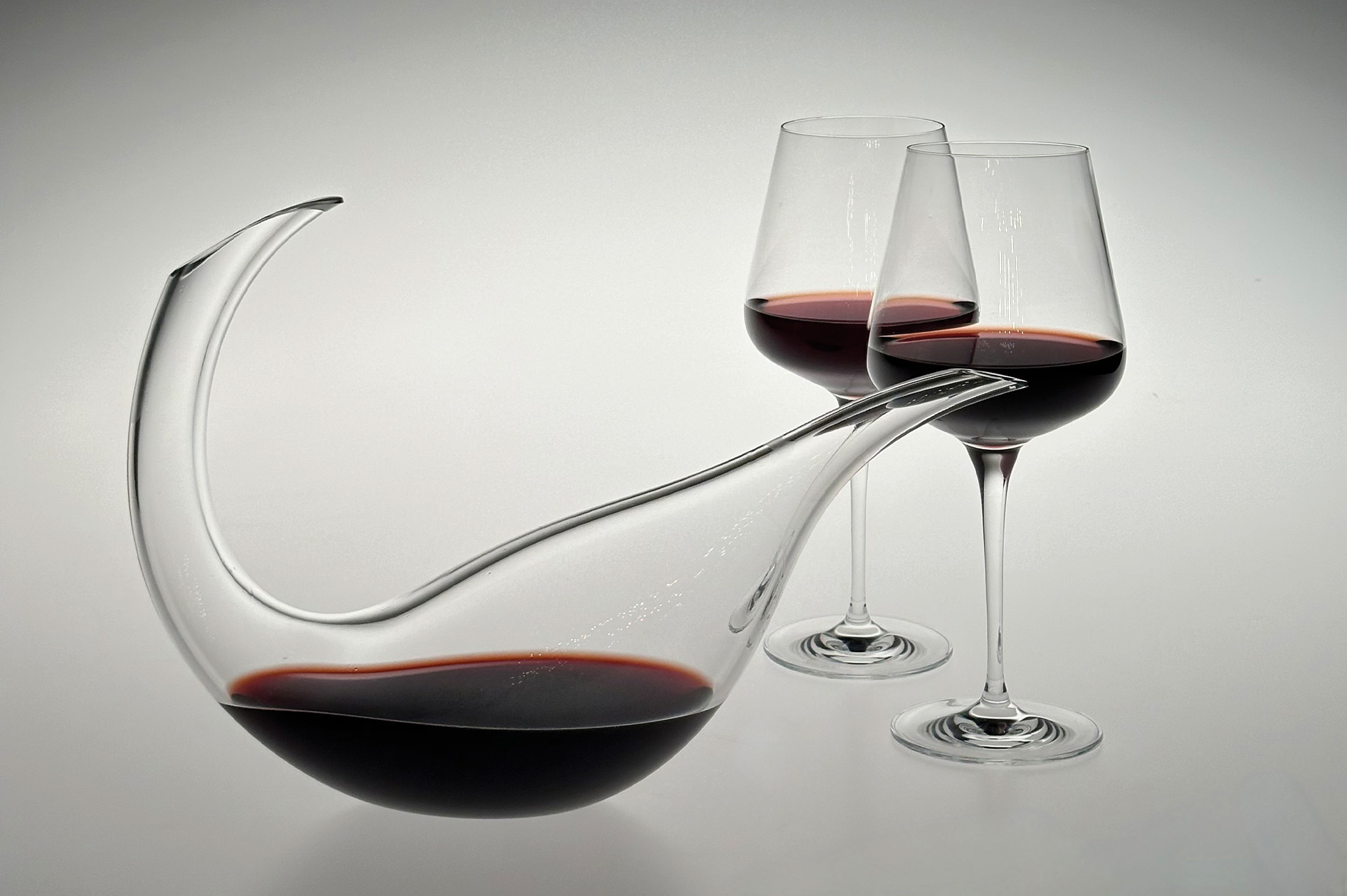
Fabio Fornasier
A Murano blown-glass decanter, entirely handmade and made unique by the subtle variations left by the master glassmaker. Its design reinterprets the sinuous lines of the LU Murano chandelier collection, adapting them to a form conceived for wine tasting. Transparent crystal allows light to pass through the wine, enhancing its colour and accompanying the ritual of serving. The decanter brings together Murano glassmaking tradition and contemporary formal research in a balance of craftsmanship, functionality and ritual.
_________
"MAKE MAKE"
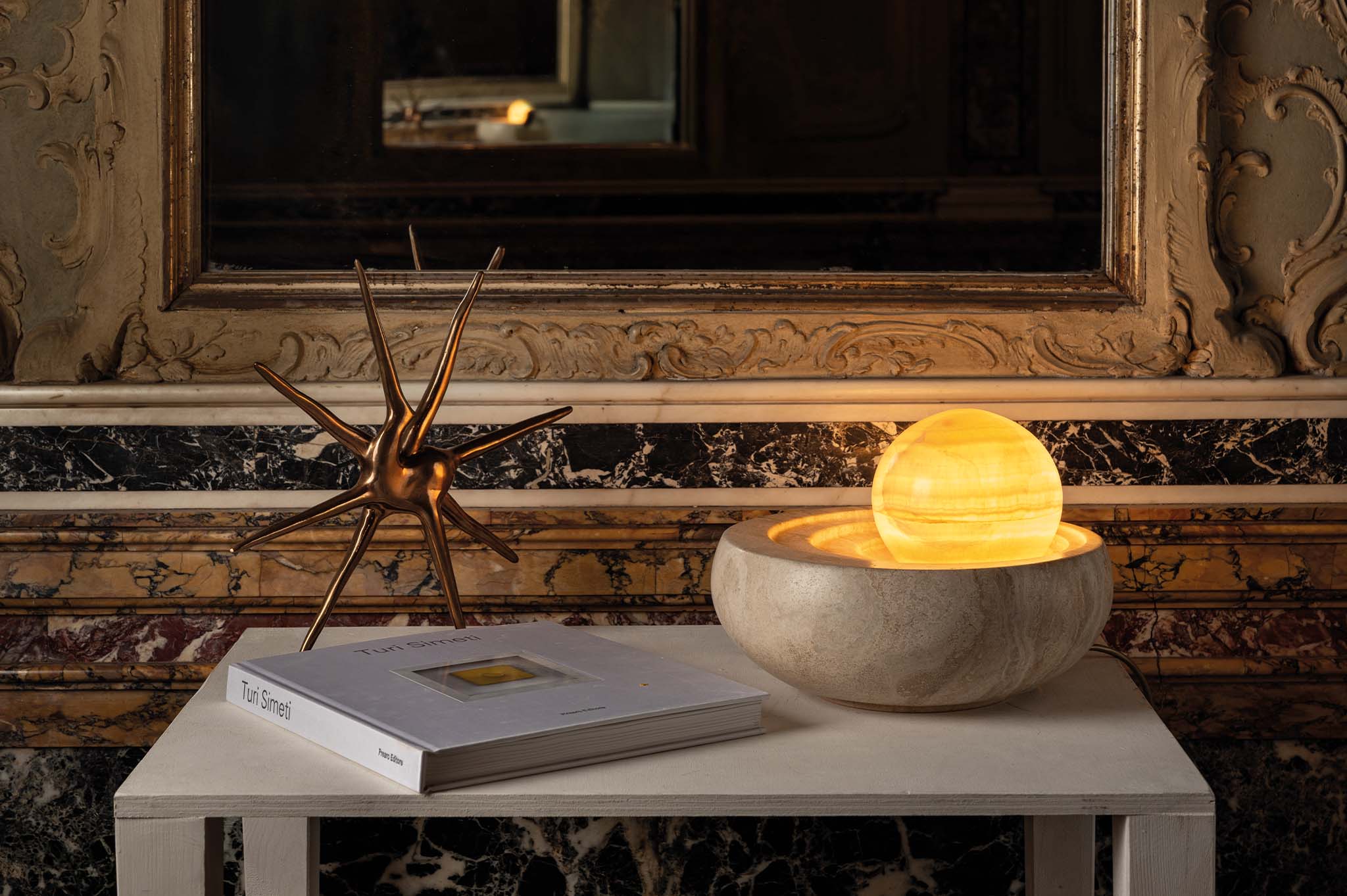
Impressive by Manuela Uka
The lamp is inspired by Make Make, the dwarf planet discovered in 2005 and named after the creator deity worshipped on Easter Island. According to legend, Make Make conceived the birth of humanity after seeing his own reflection in water alongside that of a bird. The story is translated into an essential form carved from a single block of travertine. Circles opening across its surface evoke ripples in the water and the moment of reflection, while a precious luminous onyx sphere recalls the celestial body that bears the deity’s name. Material, light and symbolism intertwine, connecting the myth of origins with a cosmic imaginary.
_________
"MARIO"
F.lli Levaggi
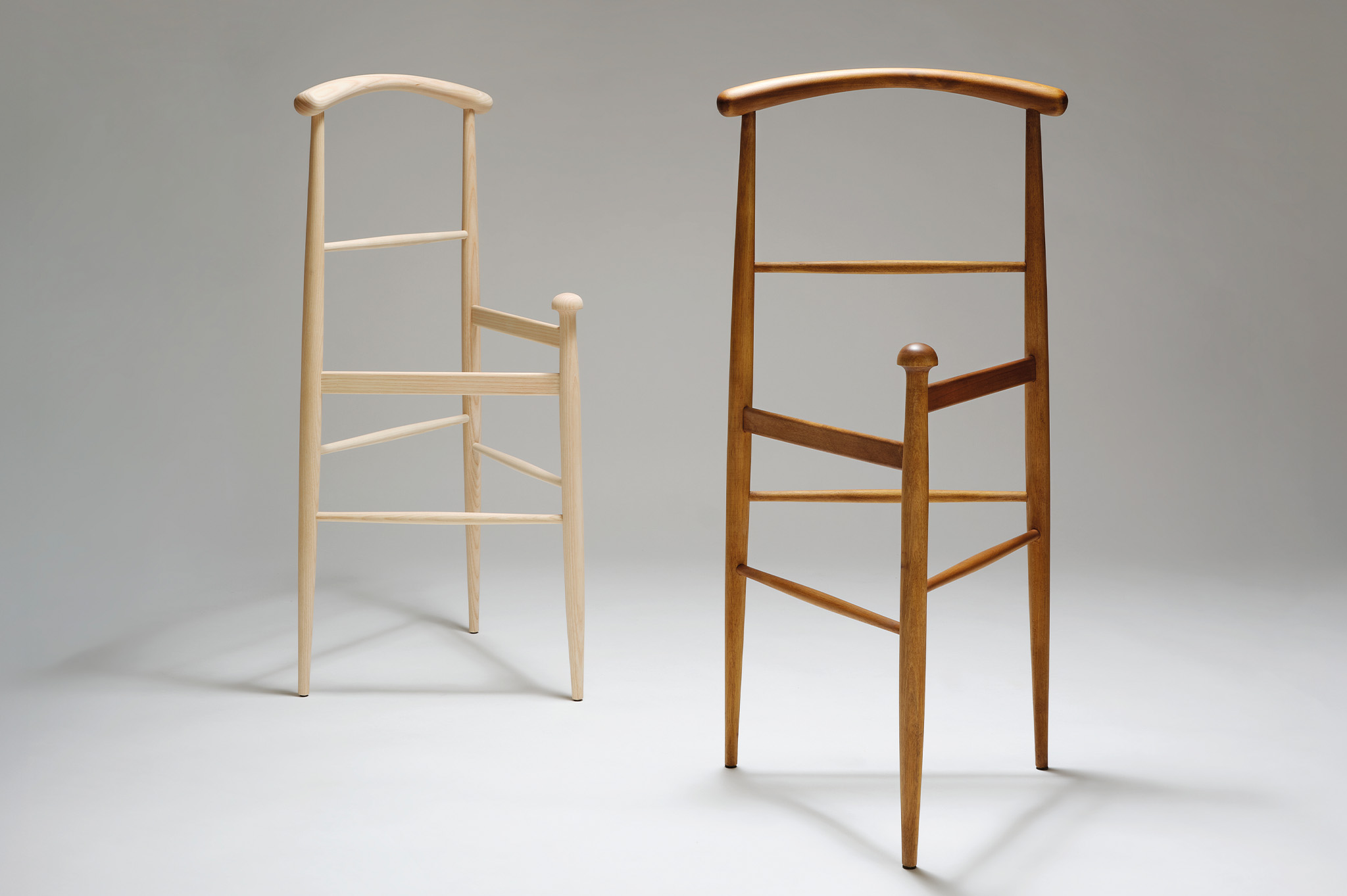
Mario is the valet stand designed by Aree di Studio for Fratelli Levaggi, born from the encounter between traditional craftsmanship and contemporary design. Conceived as an accessible and versatile object, it is a discreet and functional presence suited to different spaces. Deprived of its seat, it retains the formal memory of a chair while becoming an essential coat stand. Its three-legged silhouette evokes the archetype of the chair, allowing clothes, bags and objects to be suspended from its vertical elements. Made from local Ligurian woods, it enhances the simplicity of its form through the natural quality of the material.
_________
"OCIO LAMP"
MNM Venezia by Michela Nardin
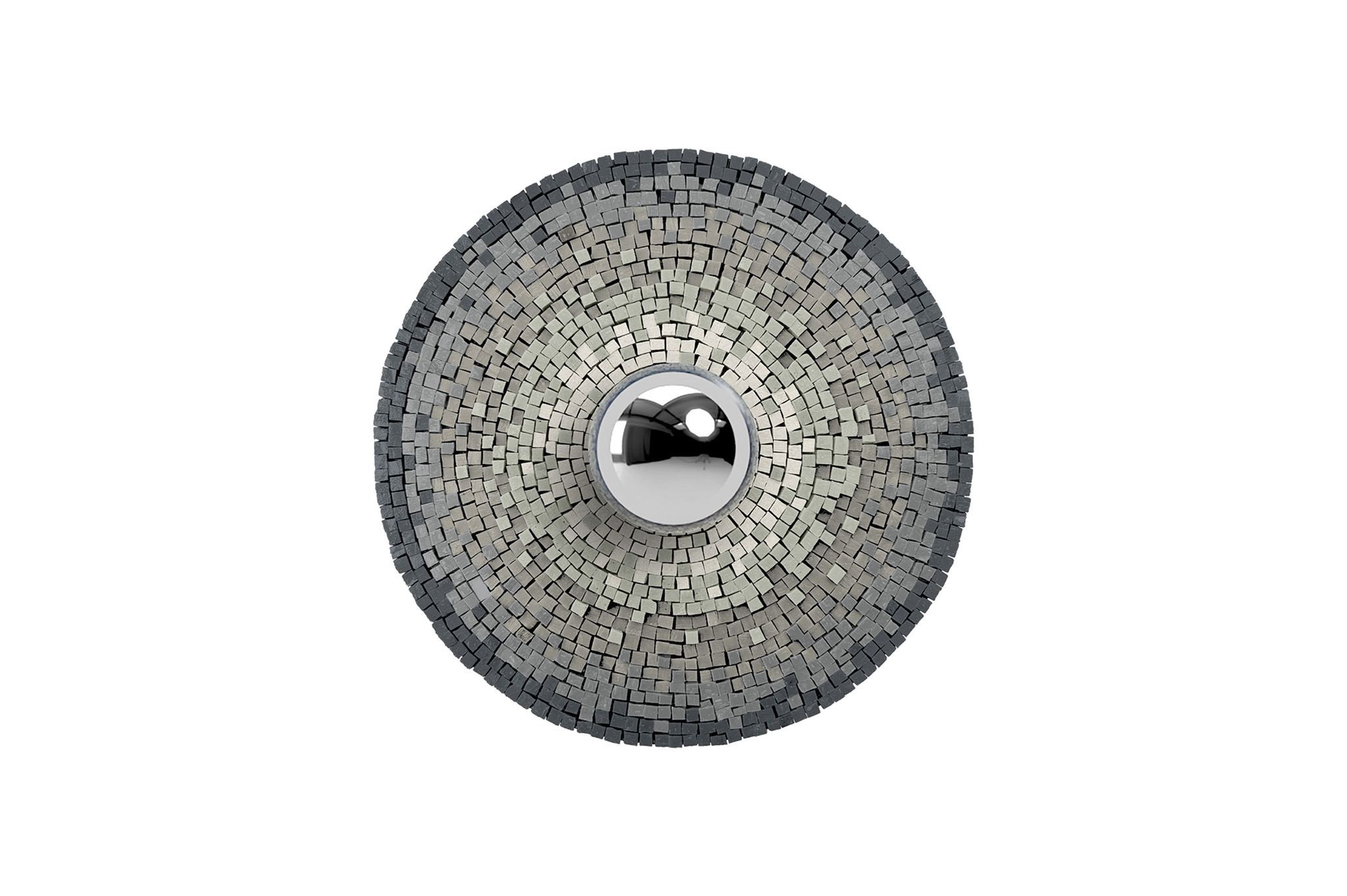
OCIO is a wall lamp featuring a glass-paste mosaic made with more than 1,300 tesserae from the historic Venetian Orsoni furnace. Arranged in a shaded radial pattern on a 24 cm aluminium disc, the tesserae create a refined gradient effect. Its name, meaning “eye” in Venetian dialect, recalls the shape of the iris and the play of shadows projected onto the wall when the lamp is switched on. A dimmable LED light source and IP44 lamp holder make it suitable for outdoor spaces, bathrooms and spas. The work combines Venetian glassmaking tradition with a contemporary exploration of light and functionality.
_________
"SALICORNIA"
Salviati
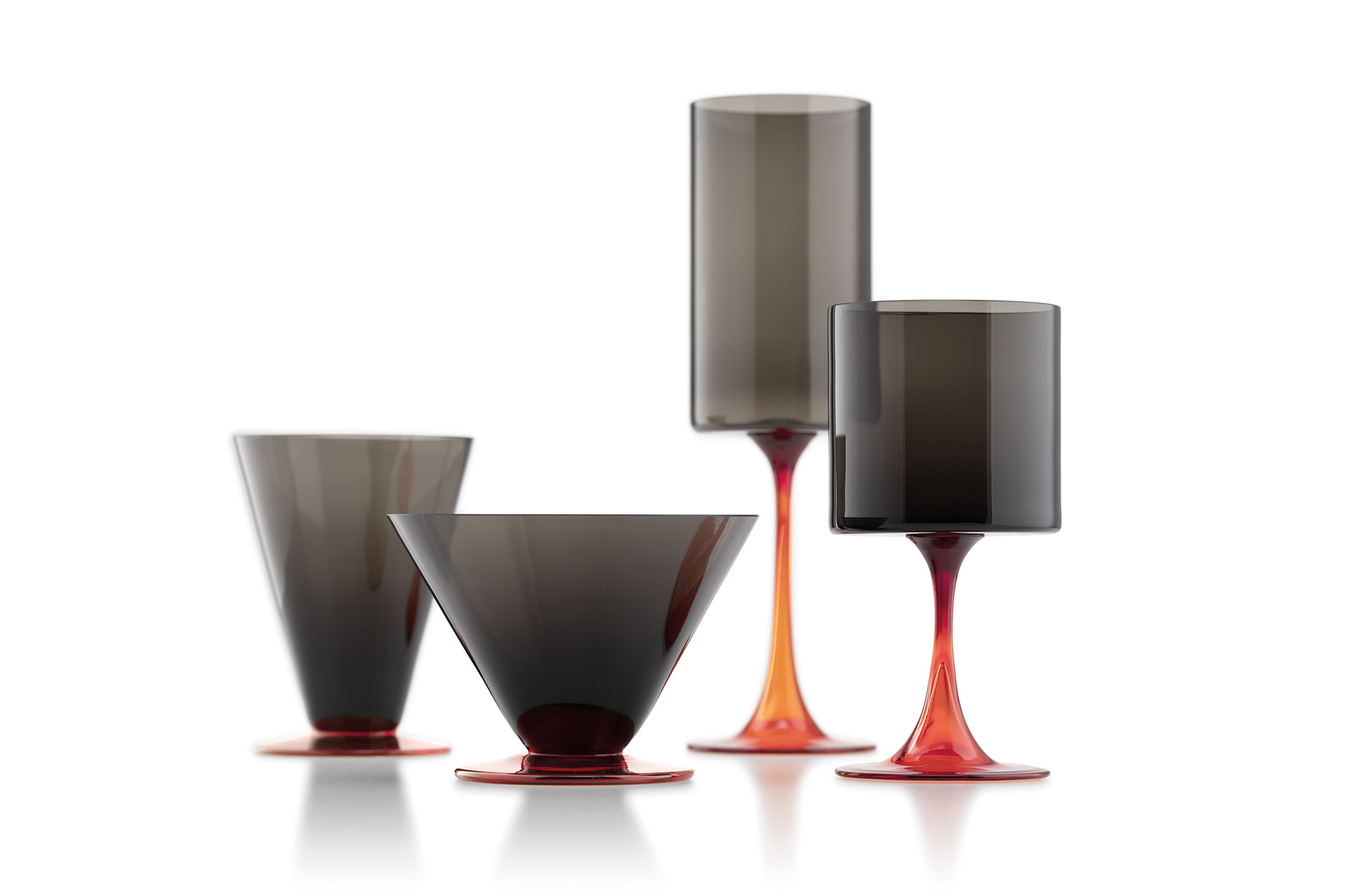
Salicornia is an edible plant typical of coastlines and salt marshes, recognisable by its long fleshy stem and reduced leaves. Once essential to glass production because of its high soda content, today it is also used in creative and experimental cuisine. Its close connection with Venice, the lagoon and Murano glass inspired the re-edition of a precious tableware collection from Salviati’s 1930s historical archive. The set includes a water glass, white- and red-wine glasses and a bowl, all distinguished by an elegant contrasting foot. The collection is available in steel grey with a red foot and air force blue with a purple foot.
_________
"SEDUTA SOPRA I PINI"
Taftique by Jules Vissers
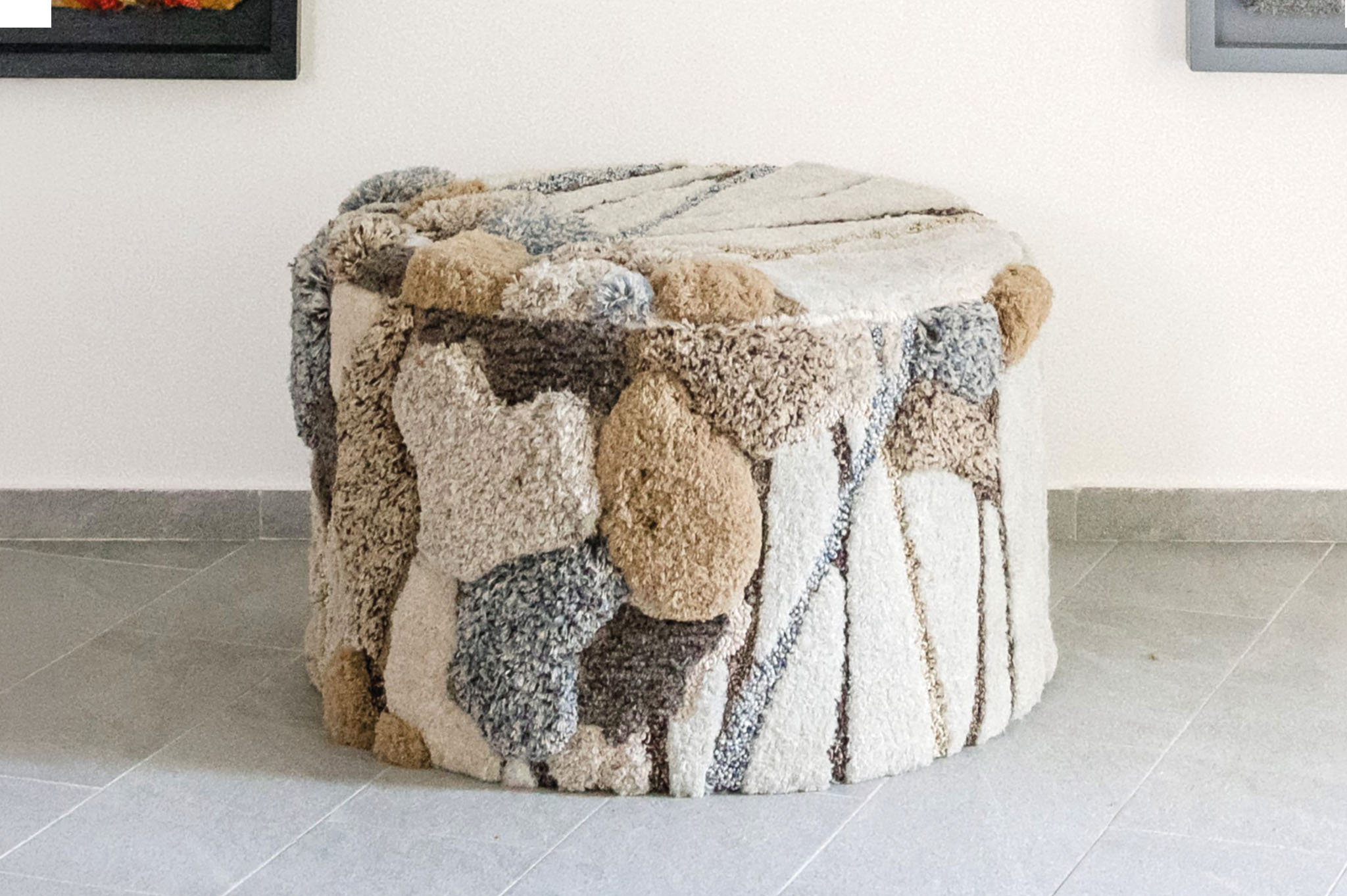
The fabric of the pouf is created using hand-tufting techniques, with both pneumatic and electric tufting guns, while the different textiles are joined through machine stitching and embroidery. The Pini collection, which includes both wall pieces and furnishing accessories, is inspired by the artist’s walks around Florence and by the distinctive forms of the Mediterranean pine, a defining feature of the Tuscan landscape. A delicate tree that needs to be preserved, the pine becomes the subject of a collection conceived to celebrate its beauty and preciousness.
_________
"VENETIA"
Wonderglass
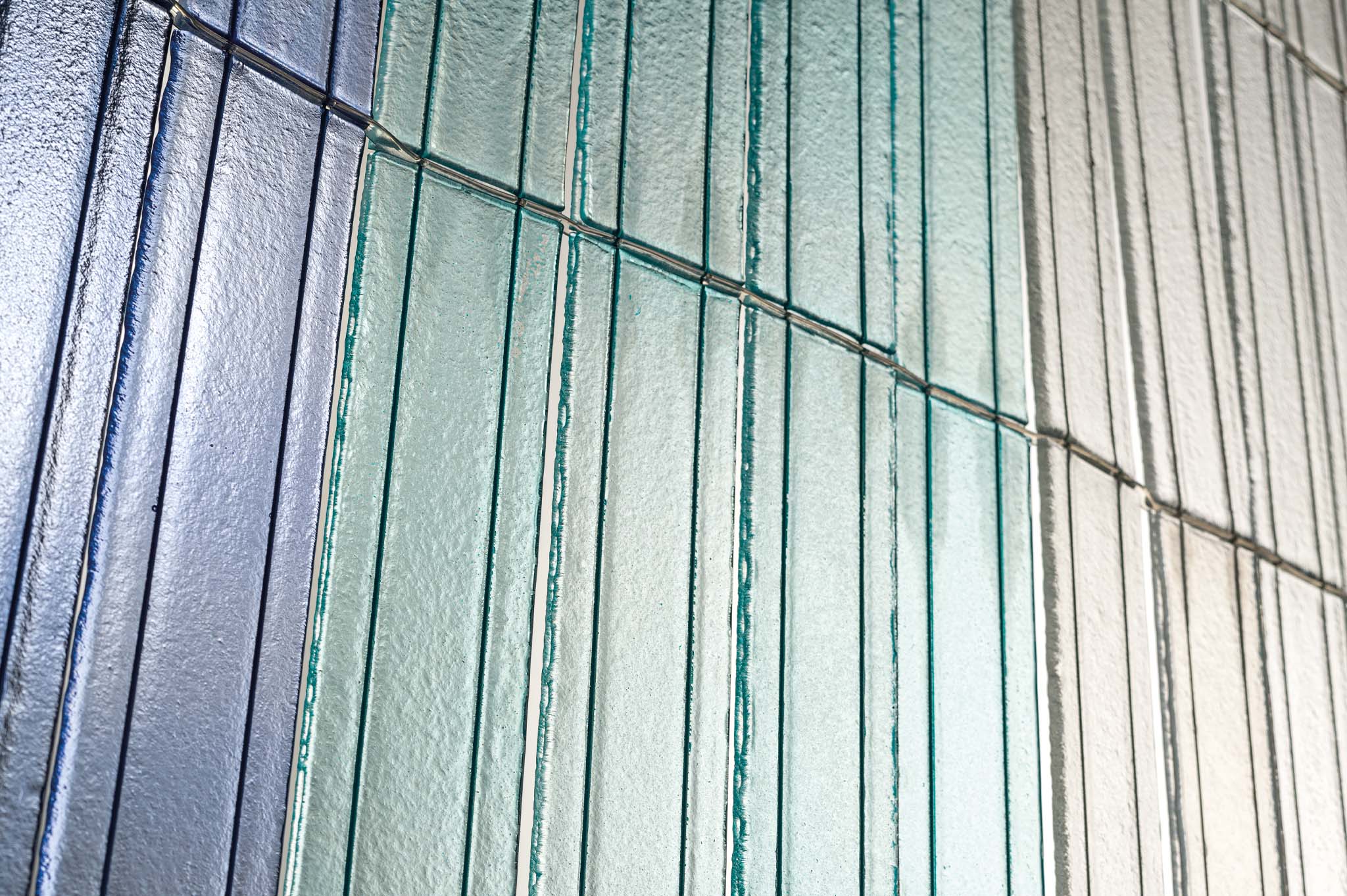
Inspired by the iridescent colours and soft light of the Venetian lagoon, Venetia is a collection of modular room dividers made from fused Murano glass tiles. Each tile is perforated and connected by almost invisible threads, allowing light to filter through delicately while maintaining transparency. The work is conceived to define interiors without rigidly separating them, creating light and dynamic surfaces. Transparency, light and material evoke the fluid dialogue between water and architecture that characterises Venice.